
10 Best Guitar Tuners in 2022 (Snark, Boss, and More)
Whether you're a casual guitar player or a professional musician, keeping your instrument in tune is a must. Without proper tuning, your melodies will sound off, your chords discordant. And while some people have the skill and experience to tune by ear, the best way to get all of your strings perfectly on pitch is to use a guitar tuner. There are tuners for acoustic guitars, electric guitars, seven-strings, baritones, and nearly any alternate tuning you can think of!
We put together a list of the 10 best guitar tuners, with Snark's Super Tight Clip On Tuner coming in first. It's compact and lightweight, with a simple interface that makes it ideal for practicing or performing. Keep reading to see the rest of our picks! And if you're not sure how to choose between all of these options, check out our buying guide for tips on how to determine what type of tuner will work best for you.

mybest US' editing team consists of experienced members who have backgrounds in writing, editing, translation, and more. We are dedicated to researching what makes a product or service the best to users in the US in order to create top-quality articles. From skincare, to kitchen appliances, and to DIY supplies, our mission is to find the best ones for you.
Why You Can Trust Us
Every mybest article is crafted with hours of in-depth research and interviews with experts. Each month, we are continually expanding our database of products based on our research. By emphasizing user insight and reliable information, we deliver trustworthy content to readers.
How to Choose Guitar Tuners
It's easy to tell the different types of tuners apart based on how they look, but do they actually function any differently? In this guide, we'll walk you through how to pick the right tuner for your playing style and needs.
Pick a Tuner That Tunes the Notes You Need
While standard guitar tuning (EADGBE) is an excellent starting place, sometimes you want to spice it up with drop tuning or a capo. Make sure the tuner you choose has the ability to tune all the notes you typically use.
Chromatic Tuners for Every Note

A chromatic tuner is what most people are familiar with. They can be used to tune any of the 12 notes in a chromatic scale and usually automatically detect the note you're playing. You can only tune one note at a time, but they’re easy to use and accurate.
Non-Chromatic Tuners for Specific Note Combinations

A basic non-chromatic tuner is only able to recognize the notes of a standard guitar tuning. If you use alternate tunings, a non-chromatic tuner can still be useful if it has settings for other tunings. But for the most part, they're best suited to beginners since you don’t actually need to know which notes to tune to.
Polyphonic Tuners Tune Everything at Once

A polyphonic tuner can tune multiple notes at once. Play all six strings and a polyphonic tuner will let you know which ones are out of tune. While these tuners can take some getting used to, they can ultimately save you time.
Strobe Tuners for Professionals

Strobe tuners are the most accurate type of tuner and are able to measure pitch within one one-thousandth of a note. These types of tuners are more expensive and are generally used by professional players and guitar technicians.
Choose a Tuner Type for Your Instrument
Guitar tuners come in a range of styles and attach to your instrument in different ways. Some use a microphone to pick up your guitar’s sound, while others measure vibrations.
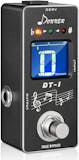
Pedal Tuners Use Direct Input

Pedal tuners allow you to plug your electric guitar directly into the tuner and typically require a power supply cord. If you play with pedals already, it’s easy to add a pedal tuner to your pedalboard.
They’re constructed like other pedals, with a durable outer casing, which makes them a bit heavier and bulkier than other types of tuners. A light-up digital display makes them easy to read in dark rooms or on dark stages.
They’re also inconspicuous; you use your foot to turn them on and off. Since your guitar signal goes directly into the tuner, you can tune without any sound coming out of your amp, just using the screen as a guide.
Clip-on Tuners Use Vibrations
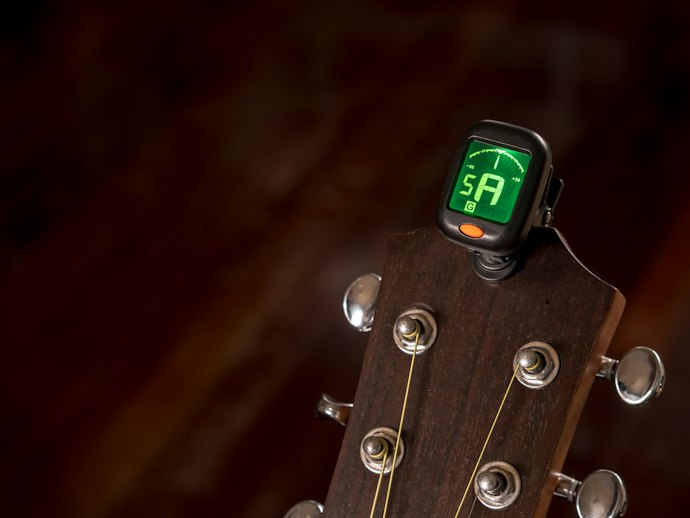
Clip-on tuners clip onto your guitar’s headstock and measure the vibrations from your strings to detect whether you’re in tune. They work with both acoustic and electric guitars. They’re typically fairly small and lightweight with a colorful screen that swivels so you can adjust it for the best view.
Clip-on on tuners are quite versatile and can be used on a range of stringed instruments, including violins and basses. However, because they pick up vibrations, other sounds like drums or amplified bass can interfere with your tuning.
On the plus side, there’s no need to plug anything in. If you don’t mind how a clip-on tuner looks, you can even leave it on your guitar all the time so you can tune in seconds!
Handheld Tuners Use Microphones
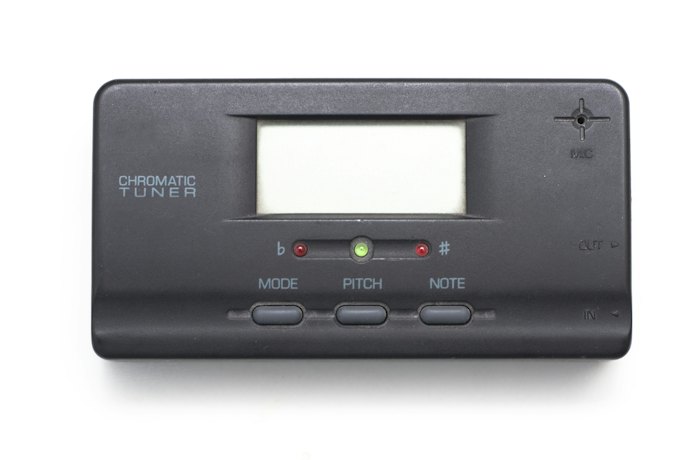
Handheld tuners can be used with both acoustic and electric guitars. They have a microphone to pick up sound and many also have a quarter-inch input to plug in an electric guitar.
If you’re in a noisy room, the microphone can pick up background noise and make it harder to tune, which can be frustrating. But handheld tuners are more likely to have extra features, like reference tones or metronomes, and can be used for other types of instruments too.
Rack Tuners for a More Permanent Solution
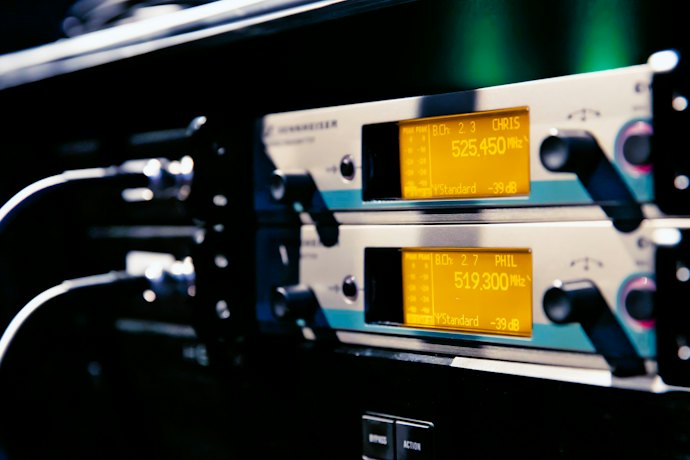
Rack tuners are designed to be part of your equipment rack, so they’re generally much larger than the other types of tuners. They’re often used in recording studios since they’re not very portable. Because of their size, they offer a bigger display and more features, like alternate tunings and presets.
App Tuners are Less Accurate but Get the Job Done

If you need to tune your guitar but don’t have a tuner, there are lots of tuning apps you can quickly download on your phone. They use your phone’s microphone to help you tune and usually provide reference pitches as well. In general, tuning apps aren’t the most accurate, but they’ll work in a pinch!
Think About Your Location
Are you performing live or practicing at home? Depending on your surroundings, a certain type of tuner may work better.
Pedal Tuners for Live Electric Performances

For electric guitar players who perform regularly, a pedal tuner is ideal. You can tune silently, there’s no risk of interference from other instruments, and you can set up the pedal before your show and then forget about it.
If you want to use your pedal tuner as part of an effects chain, you should put it first so that it gets the cleanest signal. Make sure to look for a pedal tuner with true bypass so it doesn’t affect your tone when not in use.
Soundhole Tuners for Live Acoustic Performances

For acoustic guitars, there’s a special type of clip-on tuner called a soundhole tuner. It’s designed to fit right inside the soundhole of your guitar and uses the guitar’s vibrations to tune. The guitar player can easily see it when they look down, but it’s virtually invisible to the audience.
Simplicity for at Home Use

If you’re looking for a tuner to use while practicing at home, it can be convenient to have one that doesn’t take a lot of time to set up. Clip-on, handheld, and app tuners are great for this purpose since they don’t need to be plugged in.
Look for a Display That’s Easy to Read
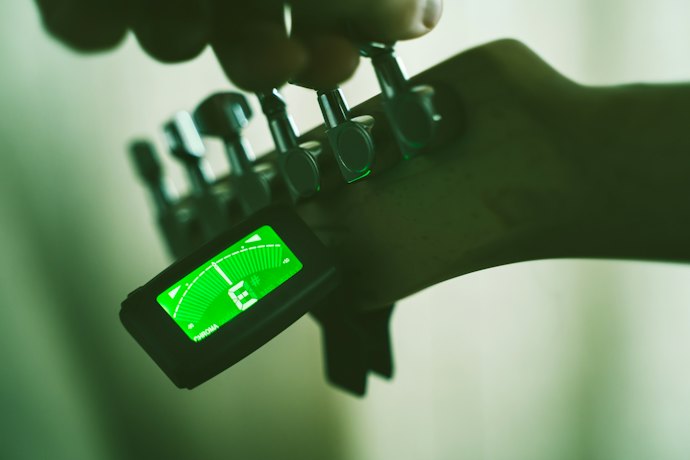
Tuners will either use a needle or lights to indicate whether you’re sharp or flat. They should also display the note or notes you’re currently playing. Some screens have colors, while others are black and white.
Look for a tuner that’s easy for you to read and understand. If you need to see what note you’re playing, make sure the display is large enough to read at arm’s length. In addition, consider your typical lighting conditions. If you often play in darkened rooms, a backlit tuner or a tuner with lights can be easier to see.
Consider Additional Features

At its most basic, a tuner will indicate how far your pitch is from one of 12 standard notes. This is usually enough for most players, but some tuners go above and beyond to offer more features.
Some tuners allow you to adjust the calibration, which can be helpful if you need to tune to another instrument that can’t be adjusted as easily, like a piano. Some tuners also have special tuning modes for seven-string and baritone guitars, drop tuning, or playing with a capo.
These modes can help you quickly change your guitar tuning between songs. They’re also helpful for beginners who want to use alternate tuning, since you can select from a preset mode instead of having to remember the exact notes.
10 Best Guitar Tuners Ranking
| Products | Image | Click to purchase | Popularity | |
|---|---|---|---|---|
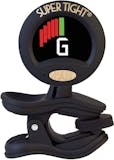
1 | Super Tight Clip-on Tuner|ST-8 Snark |  | No.1 | |
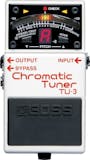
2 | Chromatic Tuner|TU3 Boss |  | No.2 | |
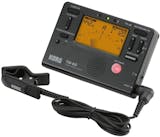
3 | Tuner and Metronome Combo|TM60BK Korg |  | No.3 | |
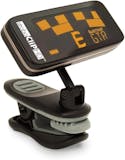
4 | StroboClip HD|SC-HD Peterson |  | No.4 | |
5 | Chromatic Guitar Tuner Pedal|DT-1 Donner |  | No.5 | |
6 | NS Micro Sound Hole Tuner|PW-CT-15 D'Addario |  | No.6 | |
7 | PolyTune 3 TC Electronic |  | No.7 | |
8 | Pitchblack Pro Rackmount Tuner|PB05 Korg |  | No.8 | |
9 | Micro Headstock Tuner D'Addario |  | No.9 | |
10 | GuitarTuna Yousician |  | No.10 |

SnarkSuper Tight Clip-on Tuner | ST-8
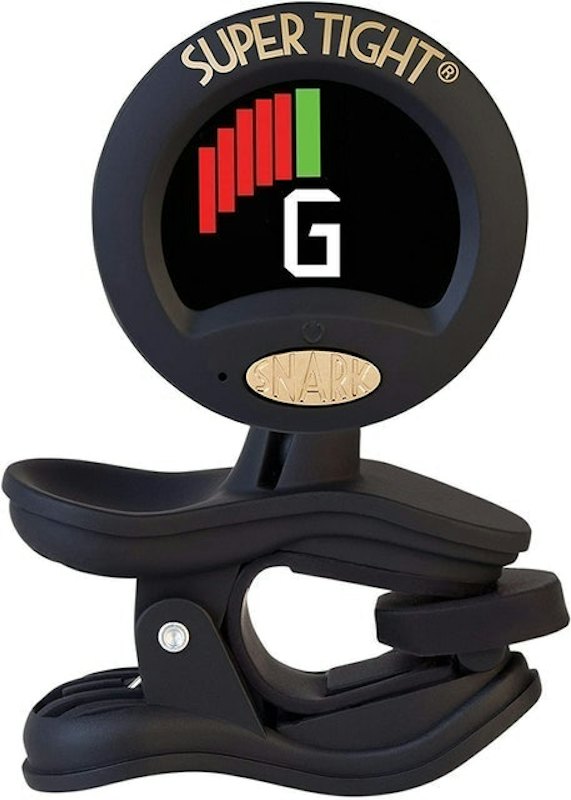
When it comes to clip-on tuners, Snark is a household name. Their Super Tight series improves on their classic model with a faster response time, high-definition full-color display, and better accuracy. The screen swivels 360 degrees so you can read it at any angle, and there's also a tap tempo light-up metronome.
Reviewers point out this shouldn't be used on Gibsons or guitars with a nitrocellulose finish. The vast majority of buyers were pleased with how easy it is to set up and use. They said it's very responsive, with a bright display that's highly visible. And they loved that they could just leave it on their guitar after tuning.
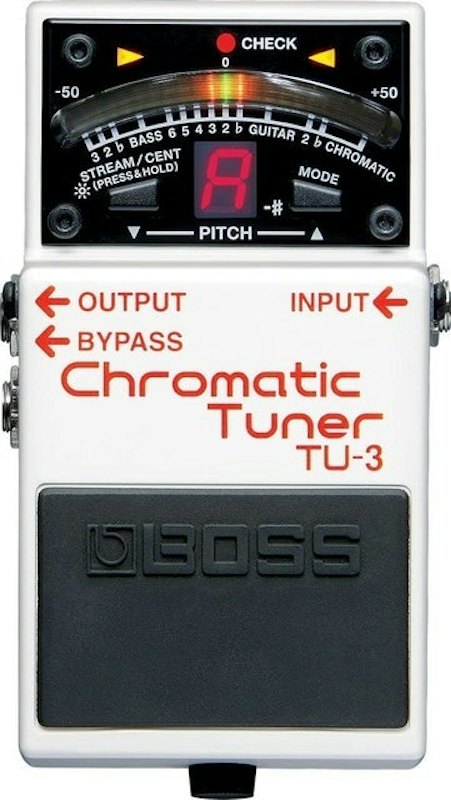
Boss' TU-3 is a classic choice for electric guitar players. Choose between chromatic, guitar, or bass modes, with support for drop tuning and seven-string guitars. LED lights help you tune and a high brightness mode ensures you can see everything even outdoors. There's a bypass jack as well as a DC output for chaining.
A couple of reviewers were disappointed that this pedal doesn't come with a power supply, although it can also be powered using the included battery. Overall, reviewers found this tuner to be a high-quality, reliable option. They said the controls are intuitive and the bright display is easy to read.
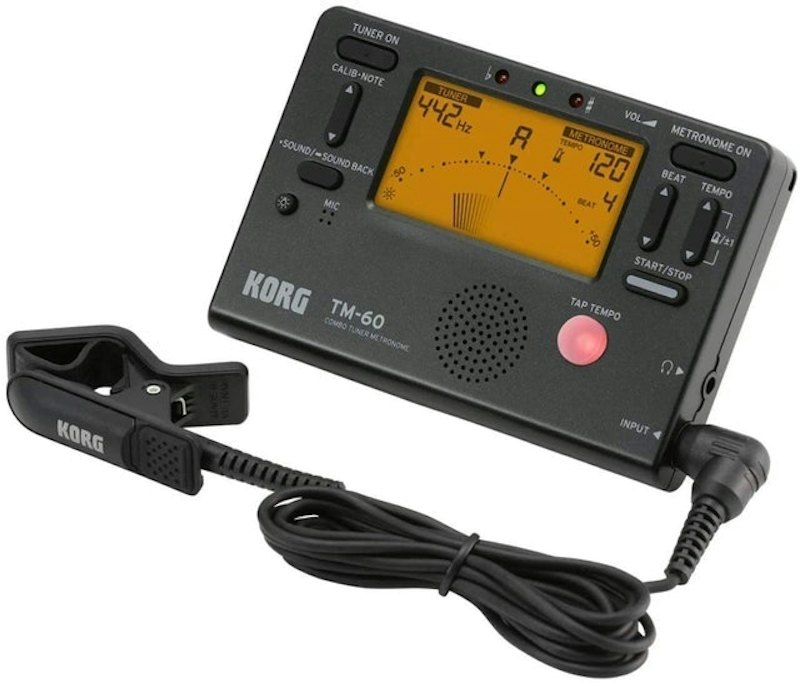
This handheld tuner from Korg will not only tune your guitar but can help you train your pitch and tempo too. It has a built-in metronome with 15 rhythm variations, which can be used simultaneously with the tuner. Clip the microphone onto your instrument to reduce interference from background noise.
A few reviewers warned that the LCD screen isn't visible from all angles. However, most reviewers said this tuner is great for tuning a range of acoustic and electric instruments. They appreciated the clip-on mic, which resulted in quick and accurate tuning, and said this was a great choice for students.
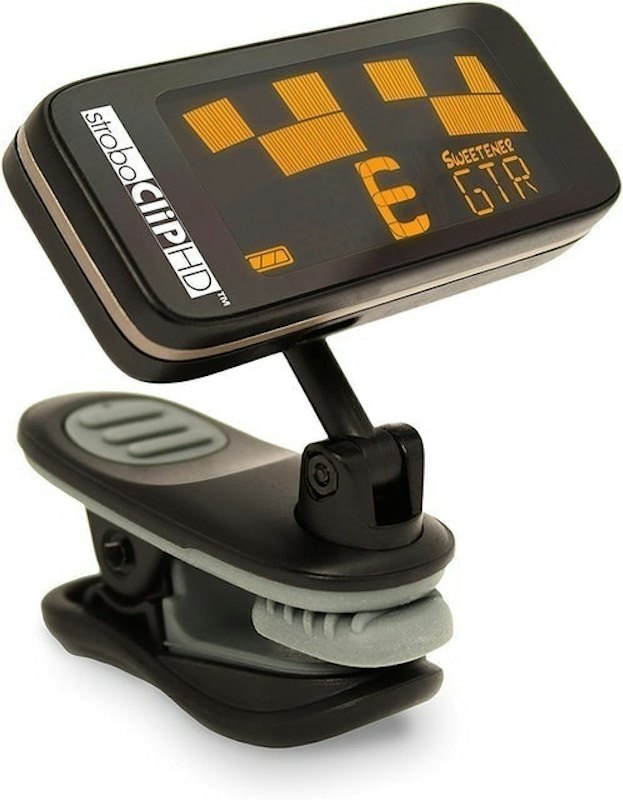
This strobe clip-on tuner from Peterson is accurate to one one-thousandth of a semitone! A padded rubber clamp makes it safe to clip onto your headstock, while the high-definition display is backlit for easy viewing. It comes with over 50 preset tunings to help optimize your sound and can support drop and capo tuning too.
Some reviewers found the buttons to be too small. Others said this tuner can be hard to use because it's so sensitive. However, most reviewers said that once you get the hang of it, this is one of the most accurate tuners out there. They liked the strobe visuals and said the presets often made their instruments sound even better!
DonnerChromatic Guitar Tuner Pedal | DT-1
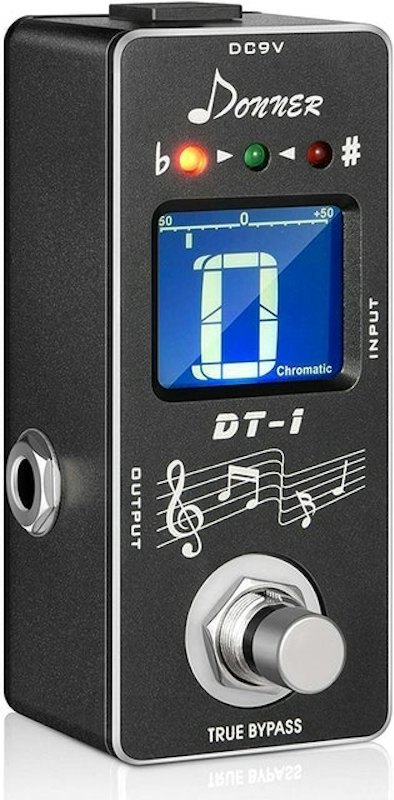
This pedal tuner from Donner is sleek and compact, with a footprint of just under two by four inches. Push the button once to enter tuning mode and again for true bypass. The LCD display will show your note and the LED lights help you fine-tune. Note that it requires a nine-volt DC power supply, which is not included.
A few reviewers said the LEDs were too bright. Others noted that it makes an audible electronic pop when turned on, so it's not super discreet. Still, many reviewers said this pedal is fast to register the note. They liked the straightforward design and said it's easy to read and accurate.
D'AddarioNS Micro Sound Hole Tuner | PW-CT-15
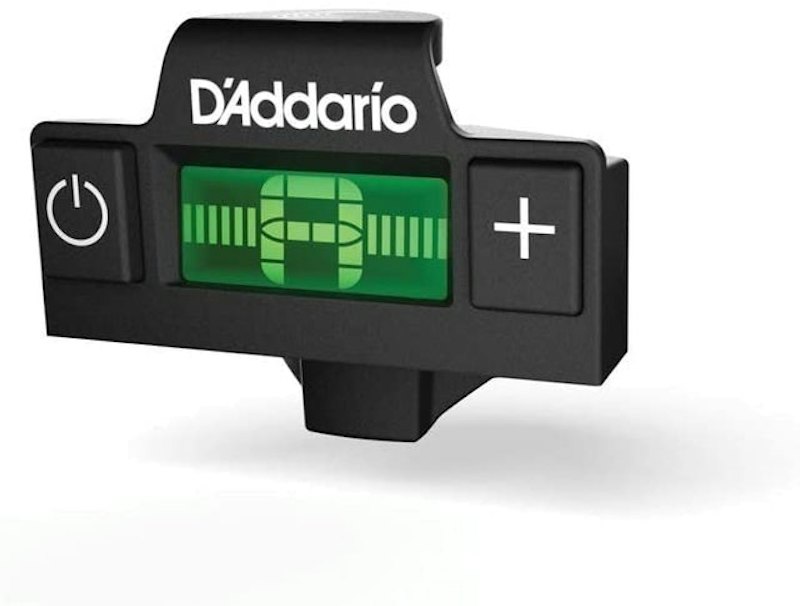
D'Addario's soundhole tuner is perfect for acoustic guitar, bass, and ukulele players. It clips onto the inside of your instrument's soundhole and is nearly invisible from the outside. Once turned on, it uses a transducer to provide quick and accurate tuning, and will automatically shut off after 10 minutes to conserve battery.
Some reviewers said the fit was too loose or too tight; it may be helpful to search for your guitar's brand in the reviews to see if anyone had issues. But for the most part, reviewers loved how discreet and convenient this tuner is. They said it's easy to look down at it once it's attached and many preferred it over the headstock models.
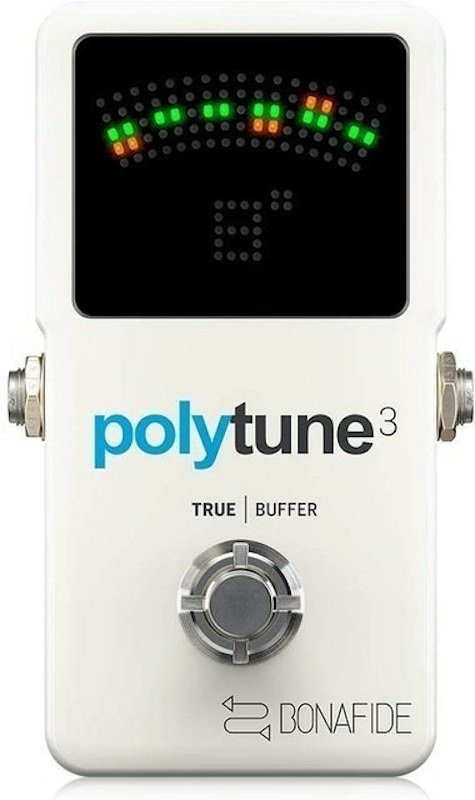
TC Electronic is the originator of polyphonic tuning technology, which can tune all of your guitar strings at once. This true bypass pedal will switch between polyphonic and chromatic tuning, depending on how many notes you play, and also has a strobe mode. The LED display automatically adjusts depending on the ambient light.
Some reviewers found there was a discrepancy in tuning between the polyphonic and chromatic modes. But for the most part, reviewers said this is a precise and user-friendly pedal tuner. They said it played well with the rest of their pedals and especially liked it for quick tuning during live performances.
KorgPitchblack Pro Rackmount Tuner | PB05

Korg's rackmount tuner isn't just for racks; it's small and shallow enough to be mounted on a pedalboard as well. It features a three-dimensional visual meter that can display in regular, strobe, or half-strobe mode. There's a mute function, a buffered output, and even a cable checker that will identify broken or shorted cables.
Some reviewers weren't pleased with the plastic housing, saying it's quite fragile. Despite this, they agreed that this tuner is extremely convenient and easy to use. They said it integrated seamlessly into their current setup and is both functional and aesthetically pleasing. And they found the cable checker to be very useful!
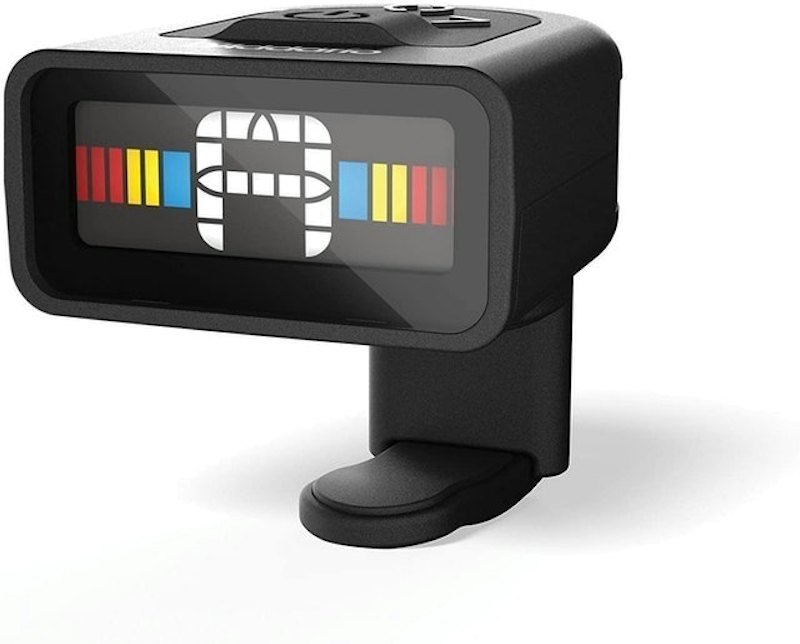
While many clip-on tuners stick out, this one from D'Addario uses an adjustable padded clamp to sit flush against the wood. At one and a quarter inches long, it's both lightweight and discreet. The screen is backlit and will display green, yellow, and red to help you tune. And you can adjust the screen to view in vertical or horizontal mode.
The main complaint reviewers had is that this tuner sometimes has a hard time picking up the low E string, although not all reviewers experienced this issue. Many found the tuner to be accurate and easy to read. They appreciated the simple, unobtrusive design and said it felt secure on their instrument.
GuitarTuna is one of the highest-rated tuning apps. The free version gives you standard tuning for a range of instruments; chromatic and alternate tunings are available for purchase. There's also a chord guide as well as games for learning chords and ear training. A tap tempo metronome helps ensure you're always on time.
Some reviewers noted that the app can be somewhat sensitive to background noise since it uses your phone's microphone. Still, the majority of reviewers praised its intuitive interface and pitch accuracy. They appreciated that it provides both visual and audio cues when tuning. This app was especially loved by beginners!
More Music Gear to Keep You Rockin' Round the Clock
Making music is an excellent creative outlet. Even if you don't consider yourself to be especially skilled, you can still have fun playing around with melodies, harmonies, and rhythms. To expand your music opportunities, check out more of our top music gear below!


The descriptions of each product are referenced from content available on manufacturer, brand, and e-commerce sites.


