

10 Best Healthy Salad Dressings in 2022 (Registered Dietitian-Reviewed)
There are, of course, many more points to consider, so we’ve broken it down with the help of dietitian Sangeeta Pradhan, and introduced 10 of our favorite yummy, nutritious dressings for you to get started on picking your healthy salad dressing. We chose Bragg's Organic Vinaigrette Dressing as the healthiest of the bunch—check out why below!

mybest US' editing team consists of experienced members who have backgrounds in writing, editing, translation, and more. We are dedicated to researching what makes a product or service the best to users in the US in order to create top-quality articles. From skincare, to kitchen appliances, and to DIY supplies, our mission is to find the best ones for you.
Why You Can Trust Us
Every mybest article is crafted with hours of in-depth research and interviews with experts. Each month, we are continually expanding our database of products based on our research. By emphasizing user insight and reliable information, we deliver trustworthy content to readers.
How to Choose a Healthy Salad Dressing – Buying Guide
And the advent of the internet, where anyone can post anything at any time, hasn’t helped matters much. We could barely separate truth from semi-truth from fiction, so asked the Web Dietitian to help us cut to the chase.
Check Serving Size and Nutrition Information
First, look at the serving size of the dressing. This is important, because it denotes how many calories you will actually be digesting. For example, if you see a 100 calorie dressing and use four tablespoons of it on your salad, it could actually be 400 calories you're intaking, if the serving size is just one tablespoon!
Some companies make serving size super small so that their product looks healthier. Don’t be misled. With salad dressings, for the most part, you need a minimum of two tablespoons to feel any zest—so that’s the serving size that we and Sangeeta recommend (each of which should pack 100-120 calories).
Pick Dressings With Less than 250 Milligrams of Sodium Per Serving

You want to avoid too much sodium in your dressing and choose something with less than 250 milligrams per serving. That’s because in a day, a healthy adult should be ideally consuming 2,300 milligrams, according to The American Heart Association. Too much sodium could potentially lead to high blood pressure.
If you are part of at-risk populations—these include, but are not limited to folks over 50, African-Americans, and people with hypertension, diabetes, or kidney disease—the AHA lowers the cap to 1,500 milligrams (so about 200 milligrams per serving). Around half of the US population falls into this group.
Finally, if you live with children 15 or younger–or if you are one–sodium intake needs to be further limited relative to their energy requirements. But we wouldn’t stress out too much about doing calculations; basically, if your daughter eats half the amount of salad you do, she should also get half the amount of salad dressing.

According to the AHA, more than 70% of the sodium we consume comes from packaged, prepared, and restaurant foods. Sodium makes your body hold on to water. As more blood flows though your blood vessels, blood pressure increases.
You can get something called edema—water retention—and what that means is your heart, which is pumping blood throughout your body, now has a higher blood volume to contend with. So it has to work harder to pump that extra fluid, and if unchecked, it can lead to congestive heart failure.
Your heart’s a muscle, and when you overwork a muscle, it gets larger, so you can end up with something called cardiomyopathy. Overall, it is very important that we watch the sodium in our diet, even for the average consumer.
The US Dietary guidelines advise limiting intake to 2300 milligrams per day for the average adult and 1500 milligrams per day to those with HTN (hypertension) and pre-HTN (pre-hypertension).
Avoid Saturated Fats and Emphasize Mostly Unsaturated Fats in Your Diet

The American Heart Association says that around 16 grams of saturated fat a day is fine—but eating too much risks high cholesterol and heart disease because saturated fat has a stable chemical structure that stays solid at room temperature, but clogs up your arteries. Ideally, you want just two to four grams of saturated fat per serving.
You also want to steer clear of trans fats. These raise the amount of bad (LDL) cholesterol floating around in your blood and drive out the good stuff (HDL cholesterol). Trans fat has been linked to heart failure, diabetes, inflammation, and other chronic diseases.
There are, however, good unsaturated fats which come with a host of health benefits. You can find them in the oils of most plants. So, look for healthy fats, stick with the suggested serving size, and try to stay within the recommended guidelines for total fat as noted below.
You want to make sure that there is a moderate amount of fat at every meal, and that includes some healthy fats in your salad dressing as well. Fat carries flavor and promotes satiety. You need fat for the absorption of fat-soluble vitamins. All kinds of hormones are made from fat. You absolutely need it as part of a healthy diet.
I would suggest limiting saturated fat intake to 1.5 to 2 grams per serving, while watching the actual number of servings as well. The US Dietary Guidelines recommend limiting saturated fat intake to around 10% a day, while the AHA recommends even lower intakes of 7% a day and 5 to 6% of total calories—or 11 to 13 grams—per day on a 2000 calorie diet for people who need to lower their cholesterol.
Be Picky About Your Oils
Oil is the number one ingredient in most salad dressings. But there’s so many different types, from so many different fruits, vegetables, and seeds–and they’re processed in so many different ways. So let’s talk about a few key terms that will hopefully help you make head and tails of everything.
You Want Non-Hydrogenated Oils Rich in Monounsaturated and Polyunsaturated Fat

When you hydrogenate a liquid fat, you turn it into a solid fat by adding hydrogen. This keeps the oil from going rancid quickly, but it also unfortunately produces trans fats, which are not good.
When reading the ingredients label, make sure there is no partially or fully hydrogenated oil. Steer clear of shortening as well, which is made from partially hydrogenated oil.
Instead, look for liquid oils, which are brimming with healthy (unsaturated) fats. They do just the opposite of hydrogenated oils, which means they lower cholesterol and the risk of heart disease. However, there are a lot of theories about nutritional differences between monounsaturated (MUFAs) and polyunsaturated (PUFAs) fats.
There’s definitely a case to be made for including both MUFAs and PUFAs—i.e. omega-3 and omega-6 fatty acids—in your diet. There is some evidence linking diets containing MUFAs with favorable changes in weight and body composition in women with obesity.
In addition, MUFAs have been linked to reducing LDL cholesterol and triglycerides and raising HDL cholesterol levels. And they’re found in nuts, seeds, olive, and avocado oil.
Find Plant-Based Oils or Simply Liquid Oil-Based Dressings

Sangeeta wants you to know that you need both MUFAs and PUFAs as part of a healthy diet. As long as you are consuming salad dressing in moderation and all the oils are liquid, you will be taking in a healthy amount of fat, be they mono or poly. Most plant-based oils are full of unsaturated fat, so look out for nut, avocado, peanut, sesame, and olive oil.
But I haven’t seen studies to support whether monos are better or superior than polys, per see, so we want to proceed with a common-sense approach. And that would be to just replace those solid fats with liquid oils, be they mono or poly, or to replace them with whole-plant fats, such as the fats found in nuts, seeds, and avocados.
We don’t want to just keep focusing on the fatty acids in the diet because, ultimately, it’s not isolated nutrients that matter. It’s whole foods and whole dietary patterns that count. So, every so often, I think we just need to take a step back and look at the big picture so that we don’t miss the forest for the trees.
Assume Products are Chemically Processed Unless Stated

Many oils are drawn out chemically using hexane, which is toxic. It’s heated out later, of course, but we aren’t sure how much is left over. And the heating process changes the make up and flavor profile of the oil and might even phase out some nutrients.
In a nutshell, you’re left with less high-quality, less healthy stuff. If the bottle doesn’t tell you how an oil was harvested, assume it was chemically processed.
Hexane has been classified as an air pollutant and could adversely affect the nervous system according to the Center for Disease Control. However, the whole process where you use a chemical solvent such as hexane to refine the oil is not supposed to leave a lot of residue.
For this reason, itʼs unclear whether consuming the trace residue long-term is truly a health hazard. Perhaps more studies that also explore dose-dependent effects is required.
Look for “Expeller-Pressed” or “Extra Virgin” Oils

Then you’ve got expeller-pressed oils. Here, the fruits or nuts were stuck into a giant machine, which literally squeezed the oil right out of them. But you need a lot of pressure to wring oil from a peanut. So expeller pressing, while better than chemical processing, still generates a lot of heat.
In Europe, cold-pressed oils are oils that haven’t been exposed to any temperatures above 90 degrees Fahrenheit. This means no chemical reactions and no flavor changes. In the States, however, we don’t regulate this strictly, so if you want the healthiest stuff possible, look for “expeller-pressed” or “cold-pressed” oils in the ingredients list.
The “extra virgin” you see before olive oils also refers to the extraction process. In a nutshell, “extra virgin” is the purest stuff. It’s got the strongest flavor and keeps the most nutrients and health benefits.
Obviously, an oil that is minimally processed to some extent would be preferred, but the problem with extra virgin olive oil is that its smoke point is really low. So for sautéing, you may want to use the lighter, yellow olive oil which has a higher smoke point, and use the dark green, extra virgin only for cold preparations such as dips and salad dressings.
In addition, when you buy olive oil at the grocery store, get the one thatʼs at the back of the shelf that hasn’t been exposed to light, keep it in a dark place, away from heat, and make sure itʼs tightly capped. Oxygen, light, and heat can cause oils to spoil quickly.
Ingredients List Should Be Short and Easy to Pronounce

Short ingredients lists are good. You want them to start off with any of the oils from up above, water, or vinegar, followed by a bunch of seasonings that sound like they were plucked out of an Italian kitchen. You don't want anything chemical that you can’t read.
You also want, of course, no high fructose corn syrup. In excess amounts, high fructose corn syrup is stored preferentially as fat in the liver, leading to fatty liver and insulin resistance.
If you’re having two tablespoons of salad dressing with some artificial ingredients once every two weeks, but the rest of your diet consists of whole and unprocessed foods, that is considered a negligible amount. If your diet is high in processed foods and you are choosing salad dressings with artificial ingredients, you may want to reconsider.
A general rule of thumb is to try to eat foods that are as close to their original source as possible. We want to bear in mind that industrial processing is relatively new—perhaps 100 to150 years old at best. Before that, our ancestors pulled food out of the ground and from trees.
While our modern, fast-paced lifestyles would certainly not allow us to slave over a hot stove all day long, there is a strong case that one can make for consuming foods that are whole and minimally processed to optimize one’s nutrient intake.
Make Sure the Dressing Complements Your Salad
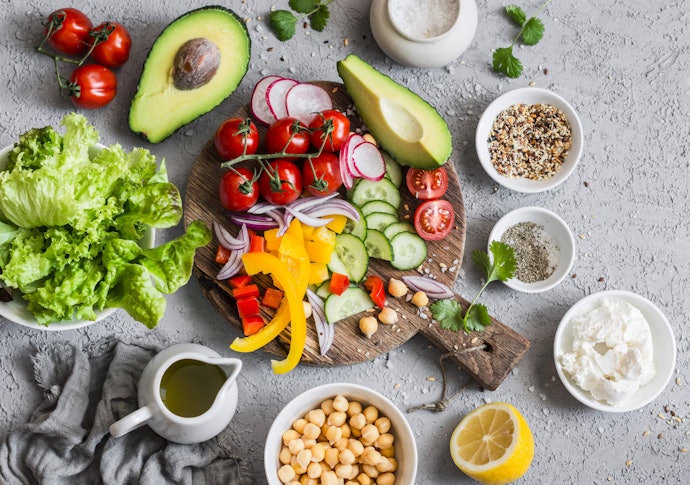
All the flavors, ingredients, and textures have got to be compatible, so make sure your dressing pairs well with your favorite kind of salad. Of course, a lot of this is up to preference, but here are some of our favorite blends.
All-green salads and seafood are refreshing with a slightly sour vinaigrette or a dash of Italian. Lean protein goes well with something a little creamy or cheesy (ranch or Caesar.) That chicken, ham, or tuna salad would appreciate something sweet—maybe fruit-based, or honey mustard.
Greek dressing is light, so it’ll enhance the flavor of fresh ingredients, without detracting from stronger ingredients, like onions and cheeses. Sangeeta makes her salad dressings from scratch, but you can still draw inspiration from her creations when you throw together your next salad and are looking for a new dressing to try.
I love to add fresh, succulent fruits to my salads to make them pop with flavor and give them a refreshing twist. The added acidity in salad dressing gives it a tangy flavor. Honey can also to give it a naturally sweet flavor.
Fresh fruit can give a regular garden salad a slightly unexpected twist. In addition, it also adds a very important nutrient—vitamin C, an antioxidant, not to mention other phytonutrients.
10 Best Healthy Salad Dressings
| Products | Image | Click to purchase | Popularity | |
|---|---|---|---|---|
1 | Bragg Organic Vinaigrette Dressing Bragg |  | No.1 | |
2 | Baja Precious Infused Balsamic Quartetto – Raspberry, Blackberry, Green Apple & Mango|4 pack Baja Precious |  | No.2 | |
3 | Drew’s Classic Italian Vinaigrette Dressing (Pack of 6)|6 pack Drew’s All Natural |  | No.3 | |
4 | Tessemae’s All Natural 4-Pack Salad Dressing (Lemon Garlic)|4 pack Tessemae’s All Natural |  | No.4 | |
5 | Tessemae’s Organic Creamy Ranch Tessemae’s All Natural |  | No.5 | |
6 | Skinnygirl Raspberry Vinaigrette Salad Dressing|2 pack Skinnygirl |  | No.6 | |
7 | Annie’s Organic Vegan French Dressing|6 pack Annie’s Naturals |  | No.7 | |
8 | Annie’s Naturals Lite Honey Mustard Vinaigrette Dressing Annie’s Naturals |  | No.8 | |
9 | Primal Kitchen Greek Vinaigrette with Avocado Oil Primal Kitchen |  | No.9 | |
10 | Mantova Flavored Extra Virgin Olive Oil Variety Pack: Garlic, Basic, Chili Lemon|4 pack Mantova |  | No.10 |

BraggBragg Organic Vinaigrette Dressing

Apple cider vinegar is antibiotic. It fights off infection, soothes sore throats, and heads off indigestion and diarrhea. Two tablespoons contains 9 grams of fat, only 1.5 of which is saturated, so you know most of it’s the cholesterol-fighting stuff from olive oil.
It’s flavored with onion, black pepper, and garlic, so this dressing’s got a kick to it. The garlic is noted to be especially strong, so if you love the stuff, this one might be for you.
Baja PreciousBaja Precious Infused Balsamic Quartetto – Raspberry, Blackberry, Green Apple & Mango | 4 pack

All the flavors have fans. You're getting 7 grams of sugar every tablespoon (and no fat)—but with this consistency, a little goes a long way. The ingredient’s list is two items long: aged white balsamic vinegar and natural flavoring. It is a foreign product–imported from Italy, but bottled here in the States.
Drew’s All NaturalDrew’s Classic Italian Vinaigrette Dressing (Pack of 6) | 6 pack

It’s flavored with lemon juice, garlic sea salt, black pepper, sugar cane, basil, and bell peppers. It’s got a strong zest to it and tastes great with chicken, on all-green salads, or even drizzled over pasta.
Tessemae’s All NaturalTessemae’s All Natural 4-Pack Salad Dressing (Lemon Garlic) | 4 pack
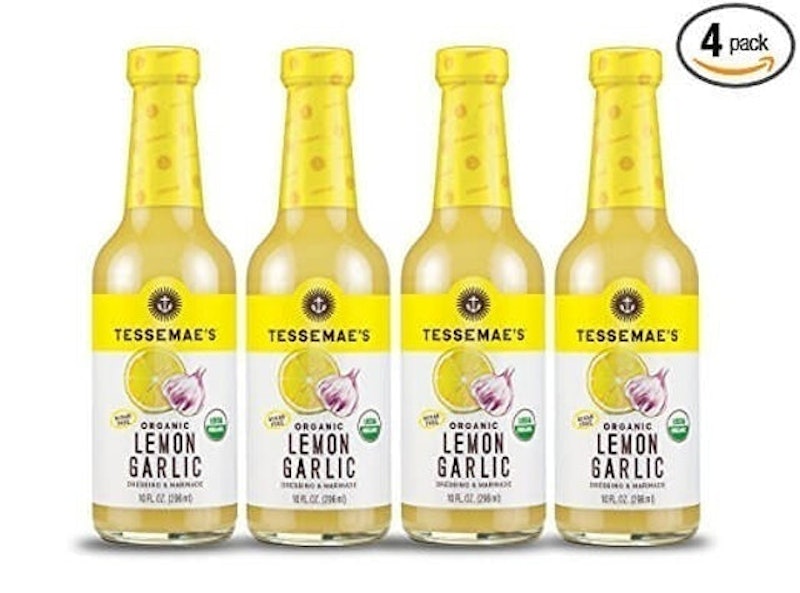
It’s perfect for stir-frying spinach or pan-frying salmon. It’s almost a mystery how flavorful it is, seeing as the ingredients list is super short: sunflower oil (which has your anti-aging oleic acid), lemon juice, olive oil, mustard, garlic, and sea salt.
Just two tablespoons has 20 grams of fat (only 2 grams of which is saturated), 105 milligrams of sodium, and no sugar. That’s why it’s the darling of so many health coaches.
Tessemae’s All NaturalTessemae’s Organic Creamy Ranch

What this has got is sunflower oil, water, lemon juice, mustard, and salted egg yolks—it does taste kind of eggy, though. The flavor’s full and the texture’s creamy. That’s why there’s 19 grams of fat per 2 tbsp. (1.5 grams of which are saturated)–but at least you know healthy fats are what’s packing in all that flavor.
SkinnygirlSkinnygirl Raspberry Vinaigrette Salad Dressing | 2 pack
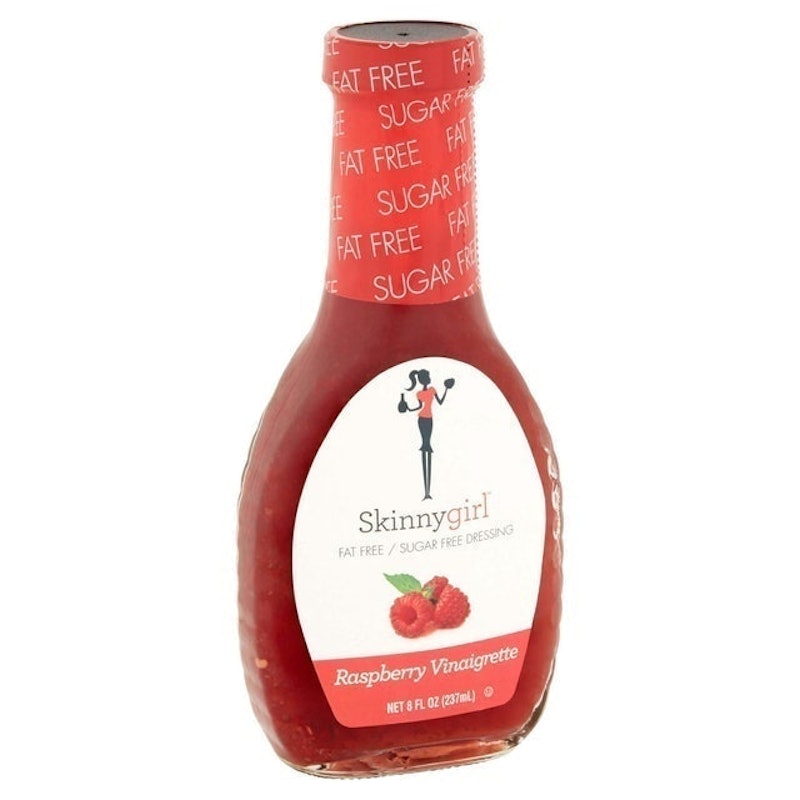
There’s a catch to the flavor, though. The dressing’s got sucralose–a low calorie, artificial sweetener–in it. But it’s approved by the FDA and has no known health risks. It’s also the second-to-last ingredient, so there’s barely any. But if you can’t bring yourself to trust it, then steer clear.
Annie’s NaturalsAnnie’s Organic Vegan French Dressing | 6 pack

It’s creamy and flavored with apple cider vinegar, tomato paste, mustard flour, garlic, and a touch of sugar and salt. It’s a mix of tangy, sweet, and savory, so it can add life to even a completely green salad. Two tablespoons has 11 grams of fat (1 of which is saturated) and 3 grams of sugar.
Annie’s NaturalsAnnie’s Naturals Lite Honey Mustard Vinaigrette Dressing

It pairs especially well with meats–pour it over ham salads, use it as a marinade on chicken, or drizzle it into turkey sandwiches. Two tablespoons of the stuff has a total of 3 grams of fat, 125 milligrams of sodium, and 3 grams of sugar. The sugar, by the way, comes from cane sugar and honey.
Primal KitchenPrimal Kitchen Greek Vinaigrette with Avocado Oil
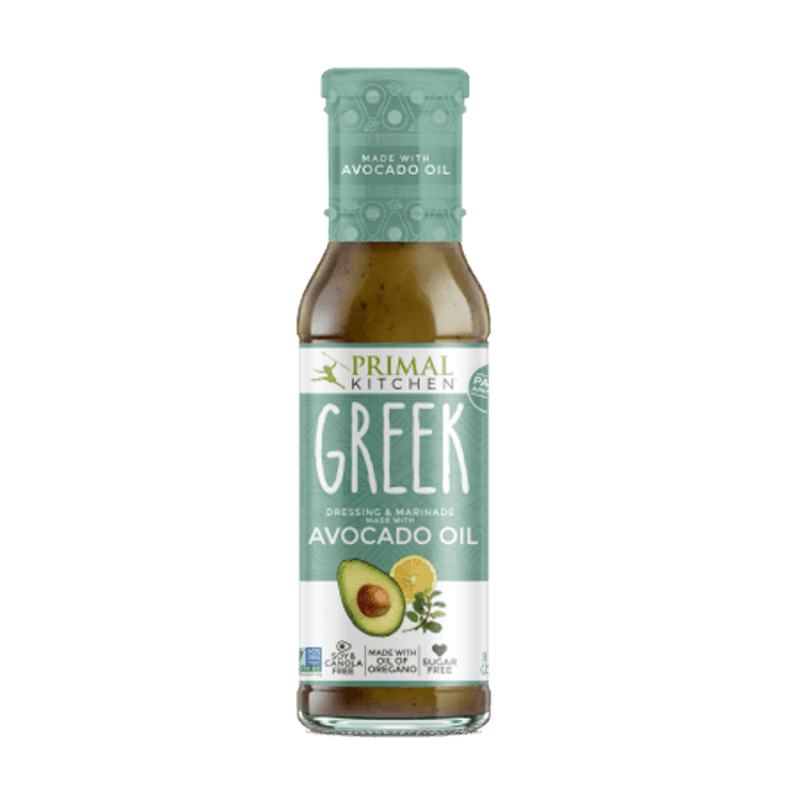
The main ingredient is avocado oil. Avocado oil’s packed with lutein, which is good for aging eyes, and oleic acid, which reduces inflammation and helps with cell regeneration.
For those who want the reap the benefits of avocado oil, but aren’t fans of Greek dressing, Primal Kitchen has 10 other flavors, including Caesar and Honey Mustard. A two-tablespoon. serving has 16 grams of fat (the good stuff from avocado oil) and 190 milligrams of sodium.
MantovaMantova Flavored Extra Virgin Olive Oil Variety Pack: Garlic, Basic, Chili Lemon | 4 pack
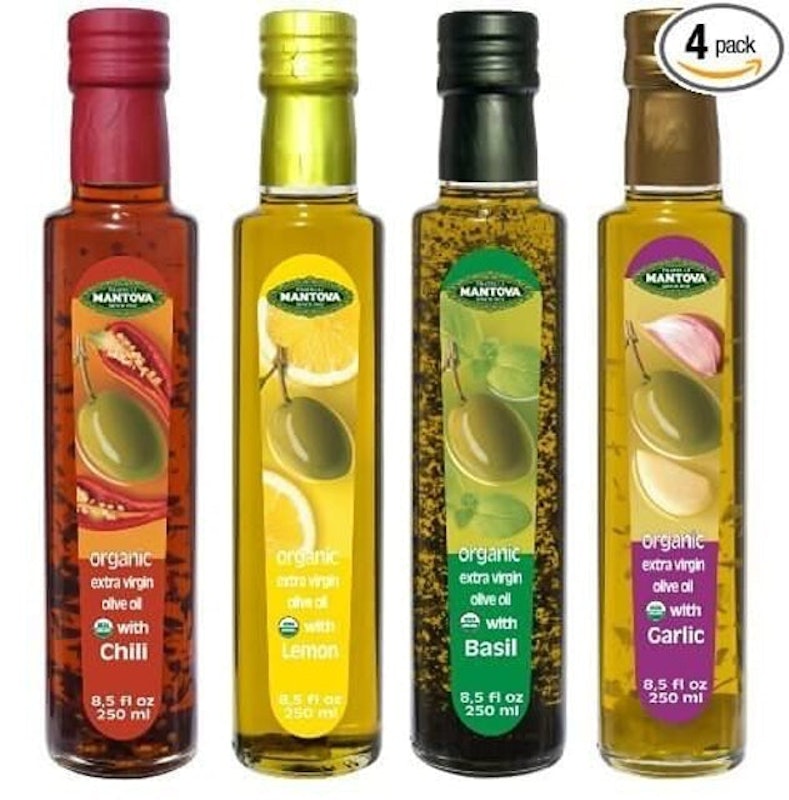
These bottles are packed with flavor–the pepper, in particular, has got some bite. They work as stand-alone salad dressings, marinades, and bread dips. The ingredients are seriously just olive oil and some spices, so a tablespoon contains 14 grams of fat. Use sparingly.
Step Up Your Healthy Salads With These Other Products
Are you looking to incorporate more healthy salads into your life? We've got you covered with these related links below!


The descriptions of each product are referenced from content available on manufacturer, brand, and e-commerce sites.